Oversized vs Regular Fit T-Shirts: How to Choose the Right Fit
Quick Answer
Regular fit follows your body the shoulder seam sits on the shoulder, with a gentle taper making it clean, versatile, and easy to layer. Oversized fit is a deliberately larger, boxy silhouette with dropped shoulders, a chest 10-15cm wider, and a longer body the streetwear standard, and cooler in Sri Lanka's heat thanks to airflow. Don't size down for oversized: the extra room is already built in, so order your normal size.
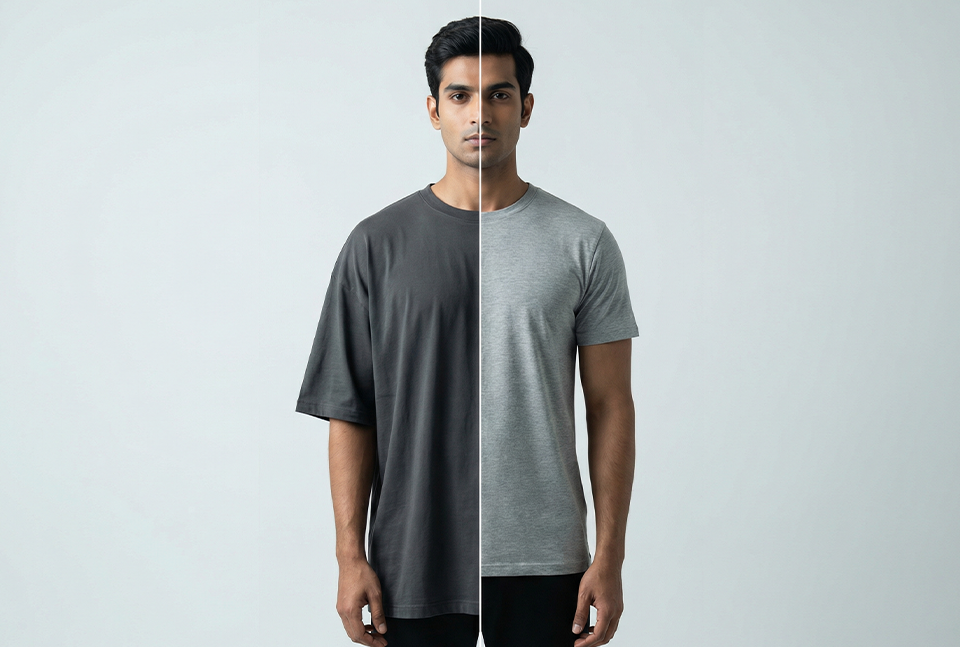
You are buying a t-shirt online and the listing says "oversized fit." You have always worn regular fit. Do you size down? Stay the same? What does oversized actually mean in terms of measurements? And will it look good on you or just look like you grabbed someone else's shirt by mistake?
These are real questions, and most clothing brands do a terrible job answering them. They throw around fit names regular, relaxed, oversized, boxy without explaining what any of it actually means for your body.
This guide covers the real, measurable differences between oversized and regular fit t-shirts, who each fit works best for, how to style both, and how to make sure you order the right size the first time.
What Is Regular Fit?
Regular fit is the traditional t-shirt silhouette that has been the default for decades. It follows the natural shape of your body without being tight or loose.
How regular fit is constructed
- Shoulder seam sits at the edge of your shoulder bone, right where the shoulder ends and the arm begins
- Chest has moderate room enough to move freely but close enough to show your body shape
- Body length ends at mid-hip, roughly at belt level or slightly below
- Sleeves end at mid-bicep, with a standard armhole that sits close to the armpit
- Side seams follow a gentle taper from chest to hem, giving the shirt a subtle shape
A well-fitting regular tee should feel like your body is wearing the shirt, not swimming in it or being squeezed by it. When you raise your arms, the hem should not ride up past your waistband. When you stand with arms at your sides, there should be no pulling or bunching at the chest or shoulders.
Who regular fit works best for
Regular fit is genuinely universal. It works on every body type because it is designed to follow natural proportions rather than impose a specific silhouette. That said, it tends to look particularly good on:
- Athletic or medium builds where the body shape complements the taper of the shirt
- People who prefer a clean, put-together look without any excess fabric
- Situations that require a polished appearance regular fit tees look appropriate in more settings than oversized ones
- Shorter frames where excess fabric from an oversized fit could overwhelm proportions
What Is Oversized Fit?
Oversized fit is a deliberately larger silhouette designed to drape loosely on the body. It is not the same as buying a regular fit shirt two sizes too big the proportions are intentionally different.
How oversized fit is constructed
- Shoulder seam drops below the natural shoulder line, sitting anywhere from 3 to 8cm down the upper arm. This creates the signature "dropped shoulder" look.
- Chest is significantly wider, often 10-15cm more than a regular fit in the same labelled size
- Body length is usually 5-8cm longer than regular fit, ending at mid-thigh or lower hip
- Sleeves are wider and often longer, ending closer to the elbow. The dropped shoulder means the armhole is much lower.
- Side seams are straighter with minimal or no taper, giving the shirt a boxy, rectangular shape
The key difference from just buying a bigger regular fit is the proportions. An oversized tee is designed so the collar, sleeve length, and body length work together at the larger dimensions. If you buy a regular fit shirt three sizes up, the collar will be too wide, the sleeves too long, and the overall shape will look wrong like borrowed clothing rather than intentional style.
Who oversized fit works best for
- Anyone going for a streetwear or contemporary casual look oversized is the dominant silhouette in current fashion
- Broader or larger builds where the extra fabric creates a comfortable, unrestricted drape rather than clinging
- Taller frames that can carry the extra length without looking swamped
- People who prioritise comfort the relaxed fit allows more airflow, which matters in Sri Lanka's heat
- Layering oversized tees work well under open shirts, jackets, or over long-sleeve bases
Side-by-Side Comparison
Here is how the two fits differ across every dimension that matters:
| Dimension | Regular Fit | Oversized Fit |
|---|---|---|
| Shoulder seam | On the shoulder bone | 3-8cm below the shoulder |
| Chest width | Body-following, moderate room | 10-15cm wider than regular |
| Body length | Mid-hip / belt level | Lower hip / mid-thigh |
| Sleeve length | Mid-bicep | Near elbow |
| Sleeve width | Standard | Wider, relaxed |
| Body taper | Gentle taper from chest to hem | Straight / boxy, minimal taper |
| Overall silhouette | Follows body shape | Rectangular, draping |
| Collar fit | Close to neck | Slightly wider |
How to Choose the Right Size in Each Fit
This is where people get tripped up. Sizing works differently between the two fits, and your usual size in one does not automatically translate to the other.
Sizing for regular fit
Regular fit sizing is straightforward. Measure a t-shirt you already own and like:
- Lay the shirt flat on a surface
- Measure the chest width from armpit seam to armpit seam
- Measure the body length from the highest point of the shoulder to the hem
- Compare these measurements to the size chart
If you are between sizes, go up. A slightly roomy regular fit looks fine. A tight regular fit looks uncomfortable.
Sizing for oversized fit
Here is the common mistake: people see "oversized" and think they need to size down to compensate. Do not do this. Oversized tees are already designed with the extra room built in. If you normally wear a Medium in regular fit, start with a Medium in oversized fit.
The oversized Medium is already cut wider and longer than the regular Medium. Sizing down to a Small will give you an awkward in-between fit not quite oversized, not quite regular with a collar and shoulder proportion designed for a smaller frame.
That said, personal preference matters:
- True size (your regular size) gives you a relaxed oversized look with controlled proportions
- One size up gives you a more dramatic, fashion-forward drape popular in streetwear
- Sizing down is almost never the right call for oversized
The golden rule
Always check the actual measurements, not just the size label. A Medium from one brand can have completely different dimensions than a Medium from another. This is true globally, but especially true in Sri Lanka where sizing standards vary wildly between local and international brands.
At ModBlitz, every product page includes a detailed size chart with chest width and body length in centimetres. Measure a shirt you like and match the numbers. This takes sixty seconds and eliminates sizing mistakes entirely.
How Each Fit Affects Your Print Design
If you are ordering a custom printed t-shirt, the fit you choose changes how your design looks and feels on the shirt. This is something most people do not think about until the shirt arrives.
Print placement on regular fit
On a regular fit tee, the fabric sits closer to the body, which means:
- Centre chest prints sit flat and are fully visible from the front. Standard sizing (28-30cm wide) works well.
- Left chest prints (logo placement) look clean and proportional at 8-10cm wide.
- The print does not warp or distort much because the fabric is not bunching or draping away from the body.
Regular fit is the safer choice if your design has text that needs to be read clearly or precise geometric elements that would look odd if distorted by fabric folds.
Print placement on oversized fit
Oversized tees have more fabric surface area and the fabric drapes differently, which affects your design:
- Larger prints look better. The extra fabric gives you more canvas. An oversized front print (35cm+) that would look too big on a regular fit looks perfectly proportioned on an oversized tee.
- Centre chest prints can get lost if they are too small. What looks like a standard print on a regular fit can look like a tiny graphic floating in a sea of fabric on an oversized tee. Scale up.
- The print folds with the fabric. Because oversized tees drape and bunch more, the print may not always be fully flat and visible. Bold, high-contrast designs handle this better than detailed, intricate ones.
- Back prints get more real estate. The longer body length and wider cut gives you space for larger back graphics.
The takeaway: If you are designing a custom tee, decide on the fit first, then design the graphic to suit that fit. A design made for a regular fit placed on an oversized tee (or vice versa) will look like an afterthought.
Styling: How to Wear Each Fit
Styling regular fit t-shirts
Regular fit is versatile by nature. It works in almost any casual outfit without needing to build the rest of the look around it.
Casual everyday: Regular fit tee with jeans or chinos. Tuck or untuck depending on the occasion. Simple, clean, works everywhere.
Smart casual: A well-fitting regular tee under a blazer or structured jacket. The closer fit keeps everything streamlined. This does not work as well with oversized tees because the excess fabric bunches under the jacket.
Active or outdoor: Regular fit moves with you without excess fabric catching or flapping. Better for cycling, hiking, or any activity where loose material gets in the way.
Layering underneath: Regular fit works as a base layer under shirts, hoodies, and jackets without adding bulk. The slimmer profile means you do not look like you are wearing two of everything.
Styling oversized t-shirts
Oversized fit is a statement. The shirt is part of the outfit's visual identity, not just a base layer. This means the rest of your outfit needs to work with the volume.
Streetwear standard: Oversized tee with cargo pants or wide-leg trousers. Chunky sneakers. This is the default streetwear silhouette and it works because the proportions are balanced everything is relaxed.
Contrast with slim bottoms: Oversized top with slim or tapered joggers, skinny jeans, or shorts. The contrast between the loose top and fitted bottom creates a deliberate, styled look. This avoids looking like everything is too big.
Tucked front: Tuck just the front of the oversized tee into your waistband and let the back hang. This creates a casual, asymmetric drape that adds shape without losing the oversized feel. Works especially well with high-waisted pants.
Beach and resort wear: An oversized tee over swim shorts is the quintessential Sri Lankan beach look. The extra length and loose fit provides coverage while staying cool in the heat. Perfect for Arugam Bay, Mirissa, or Hiriketiya.
Layered over long sleeves: An oversized short-sleeve tee over a fitted long-sleeve base creates a dimension that regular fit cannot achieve. The proportional contrast makes both pieces look intentional.
The one rule for both fits
Balance your proportions. If your top is loose, keep your bottom slimmer. If your top is fitted, you have more flexibility with your bottom half. Oversized top with oversized bottom can work in streetwear, but it requires confidence and intentional styling to avoid looking shapeless.
Climate Considerations for Sri Lanka
Fit choice in Sri Lanka has a practical dimension that fashion guides written for temperate climates overlook: heat and humidity.
Oversized tees are cooler. The extra space between your body and the fabric creates airflow. In Colombo's midday heat or on a humid coastal day, that airflow matters. The fabric is not pressed against your skin absorbing sweat it drapes away from your body, letting air circulate.
Regular fit shows sweat more. Because the fabric sits closer to your body, sweat patches become visible faster, especially under the arms and across the back. On dark colours this is less noticeable, but on light greys and heather tones it shows quickly.
Fabric weight plays a role too. A lightweight (150 GSM) regular fit might feel cooler than a heavyweight (220 GSM) oversized fit, even with the extra airflow. For Sri Lanka's climate, a midweight to heavyweight (180-200 GSM) oversized tee hits the sweet spot substantial enough to drape properly but not so heavy that it traps heat.
Which Fit Should You Choose?
There is no wrong answer only the right answer for your situation.
Choose regular fit if:
- You want a clean, versatile shirt that works in any setting
- You plan to layer it under jackets, shirts, or hoodies
- Your design has fine detail or text that needs to be clearly visible
- You prefer a more structured, body-conscious silhouette
- You are on the shorter side and want to avoid being overwhelmed by fabric
Choose oversized fit if:
- You are going for a streetwear, contemporary, or relaxed aesthetic
- Comfort and airflow are your top priority
- Your design is bold, graphic, and benefits from a larger print area
- You want a shirt that works at the beach, at a cafe, and at a concert
- You like the dropped shoulder, boxy silhouette that defines current fashion
Choose both if:
- You are building a wardrobe. Some days call for a clean regular fit tee with chinos. Other days call for an oversized graphic tee with cargos. Having both in your rotation gives you range.
Order Your Fit
Whether you prefer regular or oversized, the design is yours. Upload your own artwork and we will print it on a premium heavyweight cotton tee in the fit and size you choose.
Not sure what to design? Browse our collection to see how different designs work across different fits and styles. Every tee is DTG printed on premium cotton with island-wide delivery across Sri Lanka.
Frequently Asked Questions
Should I size down for an oversized t-shirt?
No. Oversized tees are already designed with the extra room built in, so order your normal size if you wear a Medium in regular fit, start with a Medium in oversized. Sizing down gives an awkward in-between fit with proportions cut for a smaller frame.
What is the difference between oversized and regular fit?
Regular fit has the shoulder seam on the shoulder bone, moderate chest room, mid-hip length, and a gentle taper. Oversized has dropped shoulders (3-8cm below the shoulder), a chest 10-15cm wider, a longer body, wider sleeves, and a straight, boxy shape with little taper.
Which fit is cooler for Sri Lanka's climate?
An oversized or relaxed fit in 180-200 GSM cotton is cooler because it drapes away from the body and creates airflow. Regular fit sits closer to the skin and shows sweat patches faster, especially on light greys and heather tones.
Which fit is better for my custom print?
Decide the fit first, then design to suit it. Oversized tees have more canvas and suit larger, bold prints (35cm+), but small centre-chest prints can look lost. Regular fit keeps the fabric flatter, which is better for text or precise detail that shouldn't distort.
How do I make sure I order the right size?
Always check the actual measurements, not just the S/M/L label, since sizing varies between brands. Measure a shirt you already like chest width from armpit to armpit and body length from shoulder to hem and match it to the size chart.